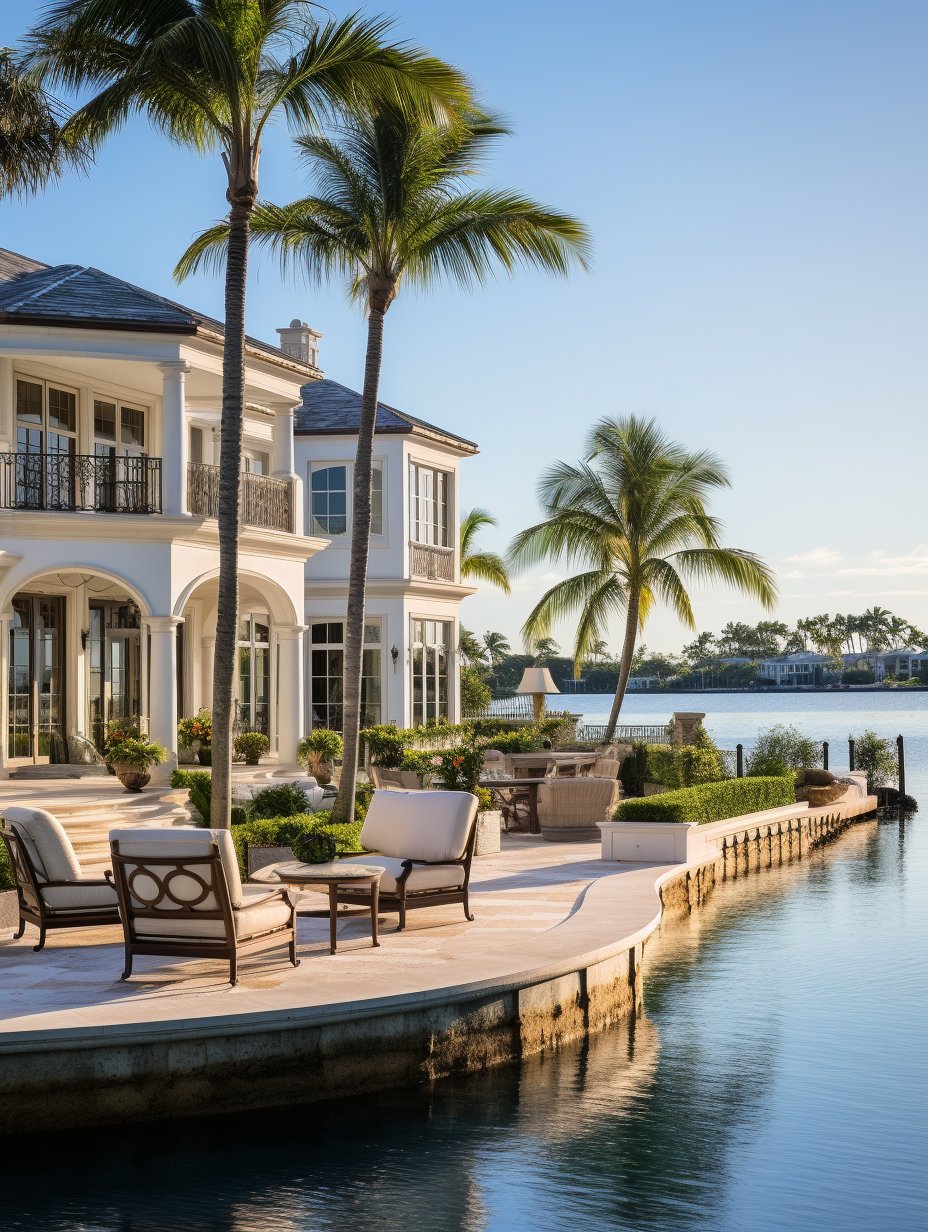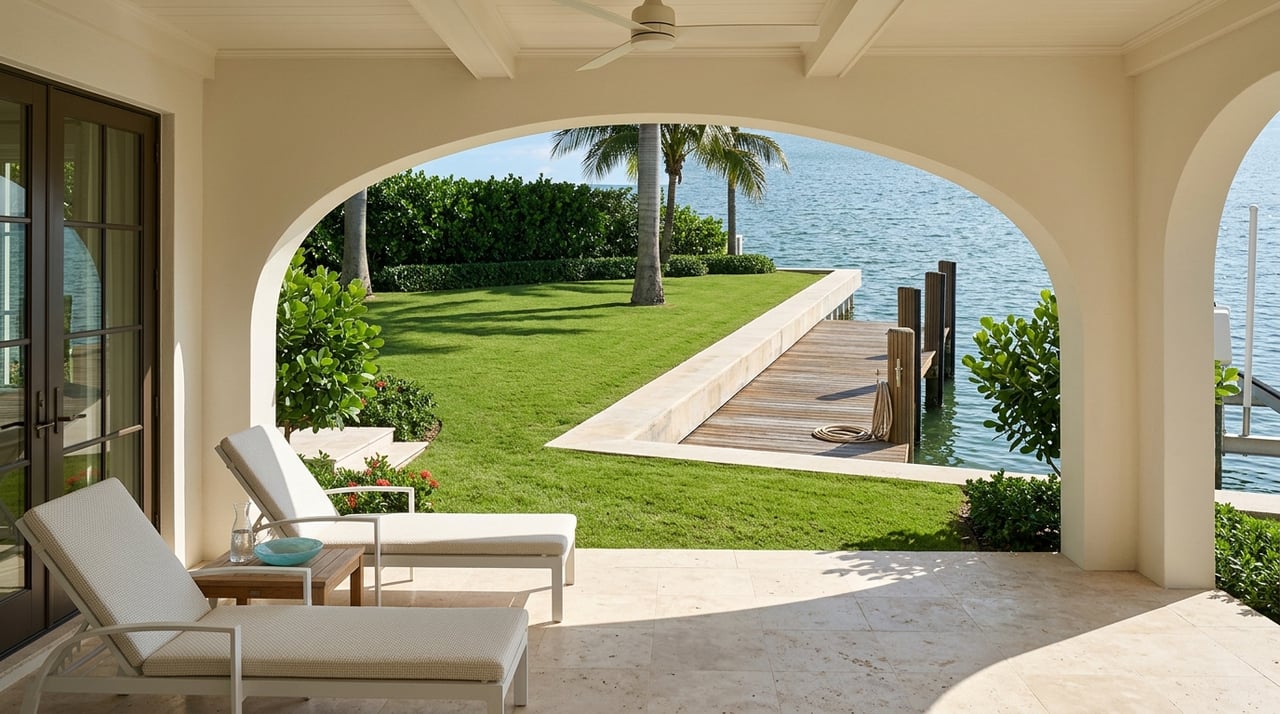
If you are thinking about buying waterfront property in Aqualane Shores, the lifestyle appeal is easy to see. You are looking at a boat-oriented Naples neighborhood close to downtown and the beach, with a mix of classic homes, rebuilt properties, and newer custom estates. But in this market, the right purchase is about more than a pretty canal view. You need to understand dock rules, flood considerations, seawall condition, and parcel-specific details before you commit. Let’s dive in.
Why Aqualane Shores attracts waterfront buyers
Aqualane Shores is a mainly residential 208-acre sub-basin in the City of Naples, generally located between 15th Avenue South and 21st Avenue South and stretching from Naples Bay toward the Gulf of Mexico. It is widely recognized as a central Naples waterfront neighborhood positioned between Port Royal and Old Naples.
For many buyers, that location is the draw. You get a compact, boat-focused setting with close access to downtown Naples and the beach, rather than a larger district with a different feel. If you want a waterfront home that supports both boating and a convenient in-town lifestyle, Aqualane Shores often lands on the shortlist.
Expect a mix of old and new homes
Aqualane Shores began development in 1949, and that long history still shapes what you will see on the market today. The neighborhood is not defined by one housing style or one era of construction.
Instead, you will typically find a blend of older homes, tear-down or rebuild opportunities, and newer custom residences. That matters because the buying process can look very different depending on the property. A newer home may offer a more current elevation or newer waterfront improvements, while an older home may require closer review of compliance, condition, and future renovation limits.
Dockage is parcel-specific
One of the biggest mistakes buyers make is assuming that “waterfront” and “Gulf access” tell the whole story. In Aqualane Shores, dock usability depends on the actual parcel and waterway dimensions, not just the neighborhood name.
Under City ordinance 56-93, piers, boat lifts, and vessels in Aqualane Shores must follow specific dimensional rules. There is a 7.5-foot side-yard setback for piers, boat lifts, and vessels. The shore-normal dimension of a pier cannot exceed the smaller of 15 feet or 10% of the waterway width, and a boat lift or combined pier-and-lift cannot exceed the smaller of 25 feet or 25% of the waterway width.
Permit applications must also include vessel size and waterway width. In practical terms, that means your ideal boat needs to be evaluated against the exact lot you are buying. A property may technically offer water access, but the canal width, dock envelope, lift placement, and navigation clearance may or may not fit how you plan to use it.
What to confirm about a dock
Before you move forward on a waterfront purchase, ask for clear answers on the existing dock setup and what is legally allowed on the parcel.
- Current pier and lift dimensions
- Waterway width at the parcel
- Vessel size used or proposed for the property
- Whether the current configuration is conforming or grandfathered
- Whether the setup affects safe navigation
- Whether any expansion or reconfiguration may require City review
The City also states that a pier cannot interfere with safe navigation or with a neighboring pier or boat lift. Some older piers, lifts, mooring piles, and vessels may be grandfathered as legal nonconformities. That can be valuable, but it also means you should not assume an older dock can be modified or expanded without limits.
Flood risk is part of ownership
Aqualane Shores is low-lying and especially vulnerable to tidal influence and stormwater challenges. The City notes that the area depends on gravity drainage, and because groundwater is close to the surface, high tide can leave rainwater with limited places to drain.
For a buyer, this is not a minor detail. Flood conditions can affect insurance, future construction plans, renovation costs, and how you think about long-term ownership.
Confirm the flood zone before you buy
The City’s 2024 Flood Insurance Rate Maps are in effect for construction and insurance purposes. The City advises buyers to confirm flood zones through its interactive map or with a licensed engineer, architect, or surveyor before purchase or construction.
Zones AE and VE are special flood hazard areas. If a property falls within one of these areas, you should understand what that means for insurance, lending, and future work on the home. The City also notes that its public flood information can change, so parcel-level confirmation matters.
Understand the 50% rule
If a structure in a special flood hazard area is substantially damaged or substantially improved, the City says the 50% rule applies. In that case, the building must be brought into compliance, including elevation to or above the base flood elevation.
This is especially important when you are considering an older waterfront home with renovation potential. A property that seems like a cosmetic update on paper may become a much larger project if the planned work or repair threshold triggers compliance requirements.
Insurance deserves early attention
Flood insurance is a core ownership cost in this market. The City states that standard homeowners insurance does not cover flooding, and flood insurance is mandatory in certain cases, including when a property in a special flood hazard area has a federally backed mortgage.
The City also notes that Naples has a CRS Class 5 rating, which can provide up to a 25% discount on standard flood policies. Even with that benefit, you should still evaluate insurance early in your search so you have a realistic view of carrying costs before you make an offer.
Seawalls can shape your budget
Waterfront ownership is not only about the house. The condition and permitting status of the seawall can have a major impact on near-term and long-term costs.
The City says seawalls and revetments must be kept in good repair. It also states that construction or repair of riprap requires a marine permit, and that riprap must be placed at the base of new and repaired seawalls on natural waterways. City staff determine whether your frontage is considered a manmade canal or a natural water body, and that can affect the permitting path.
Seawall questions to ask
When you evaluate a property, try to gather a basic history of the waterfront improvements.
- Approximate age and condition of the seawall
- Any known repairs or reinforcement work
- Whether permits were issued for past seawall or riprap work
- Whether the frontage is treated as a manmade canal or natural water body
- Whether there are visible signs of movement, cracking, or deterioration
A strong inspection and permit review can help you avoid surprises after closing.
Watch for ongoing assessments
Another detail that can affect your true cost of ownership is special assessments. The City has used special assessments for neighborhood improvements, and City records show that the Aqualane Shores Utility Line Extension Project was completed and assessments are still being paid.
That does not mean every property will be affected in the same way, but it does mean you should ask for a current picture of any remaining charges tied to the property you are considering. In a luxury purchase, carrying costs matter just as much as headline price.
Sun, lot orientation, and daily livability
Not every waterfront decision is about regulations. Some of the most important differences show up in how you will live in the home day to day.
In Aqualane Shores, lot orientation can matter more than many buyers expect. Current listings sometimes highlight southern exposure, which is one reason buyers often compare sun angle, lanai comfort, pool light, and outdoor usability alongside boating features.
If you spend a lot of time outside, these details can shape how the property feels across seasons and throughout the day. A beautiful waterfront setting works best when it fits both your boating goals and your everyday routine.
A smart buying approach in Aqualane Shores
The strongest waterfront buyers treat Aqualane Shores as a parcel-by-parcel market. Two homes on nearby streets can offer very different value once you account for dock geometry, flood zone, seawall condition, lot orientation, and the age of the structure.
A practical approach usually includes:
- Verifying flood zone information for the specific parcel
- Reviewing dock, lift, and vessel fit against City standards
- Checking whether existing waterfront improvements are conforming or grandfathered
- Evaluating seawall condition and permit history
- Asking about ongoing special assessments
- Comparing an older home’s renovation path against a newer home’s upfront price
That level of review helps you buy with confidence. It also helps you match the property to the lifestyle you actually want, whether that means immediate boating use, a low-friction second home, or a long-term custom waterfront plan.
For buyers who want both local insight and a high-touch process, that kind of detail work can make the search far smoother. In a neighborhood as nuanced as Aqualane Shores, informed guidance is not a luxury. It is part of making a smart purchase.
If you are exploring waterfront homes in Aqualane Shores and want help evaluating the details behind the listing photos, The Beretta Group offers a concierge-level, neighborhood-focused approach designed to make your Naples purchase more informed and more seamless.
FAQs
What makes Aqualane Shores different from other Naples waterfront neighborhoods?
- Aqualane Shores is generally understood as a compact, central, boat-oriented neighborhood between Port Royal and Old Naples, with close access to downtown Naples and the beach.
Why is dock size important when buying waterfront property in Aqualane Shores?
- Dock usability is parcel-specific in Aqualane Shores because City rules tie pier and lift dimensions to the waterway width, setbacks, and vessel size.
What flood issues should buyers check in Aqualane Shores?
- You should confirm the property’s current flood zone, understand whether it is in a special flood hazard area such as AE or VE, and review how flood rules could affect insurance and future improvements.
How does the 50% rule affect older waterfront homes in Aqualane Shores?
- If a home in a special flood hazard area is substantially damaged or substantially improved, the City says it may need to be brought into compliance, including elevation to or above the base flood elevation.
Why does seawall condition matter for Aqualane Shores buyers?
- Seawall condition matters because seawalls and revetments must be kept in good repair, and repair or replacement work can involve permits, added costs, and parcel-specific waterfront requirements.
Are there still assessments in Aqualane Shores?
- City records show the Aqualane Shores Utility Line Extension Project was completed and assessments are still being paid, so buyers should ask about any remaining charges tied to a specific property.